Start with the National Concert Hall for a broad classical programme, the Royal Irish Academy of Music for recitals and emerging performers, and the Irish Baroque Orchestra for repertoire-led concerts in changing venues. Choose the programme before the building. A symphony, a piano recital and a cathedral choral concert offer different evenings, even when all appear under "classical music." [1][2][3]
The National Concert Hall: begin with the programme
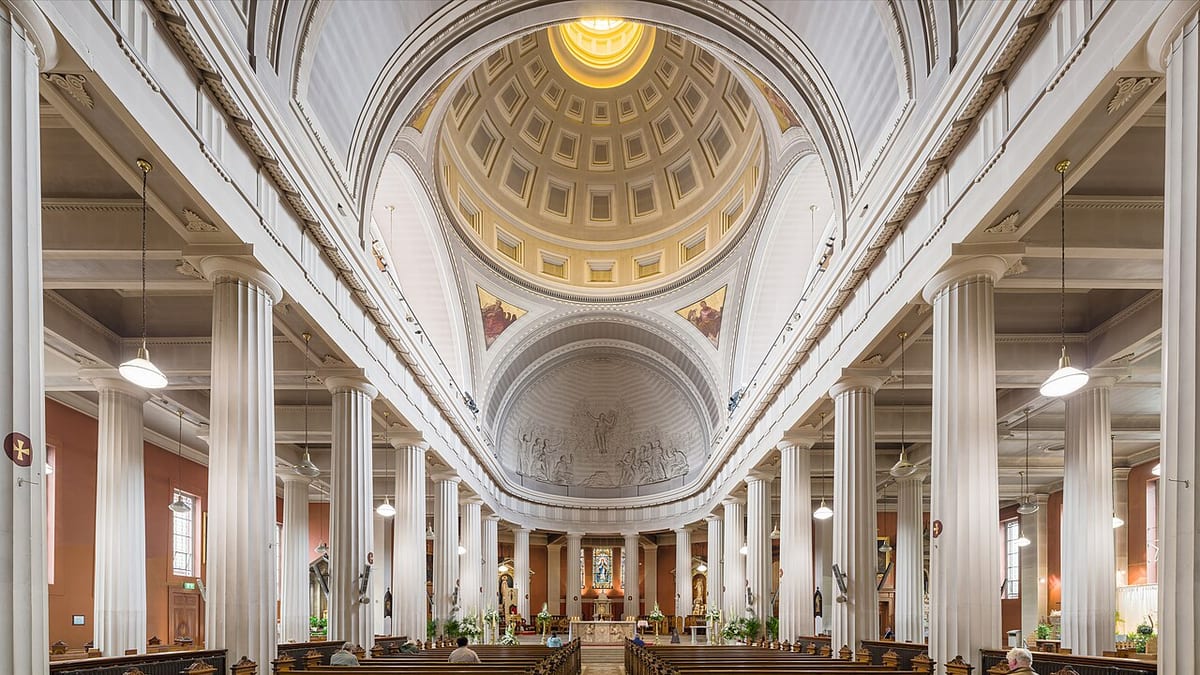
The National Concert Hall is at Earlsfort Terrace. Its 2026–27 classical listings include orchestral concerts, soloists and chamber performances, with different performance spaces within the venue. [1] Read the complete event listing rather than assuming that every concert uses the Main Stage or begins at the same time.
A useful first distinction is scale. A full orchestral concert is appropriate when you want the impact of a large ensemble. Chamber music offers a smaller combination of instruments and a different kind of concentration. A recital can be an especially clear introduction when you already enjoy a particular instrument.
For a dated example, the National Symphony Orchestra Ireland concert featuring Daniel Müller-Schott in Elgar's Cello Concerto is listed for 13 November 2026 at 19:30. Its event page advertises limited €10 student tickets alongside the regular ticketing options. [4] That is an event-specific concession, not a universal €10 ticket for every concert.
Compare seat prices within the actual performance. A cheaper seat may be perfectly suitable for listening, but restrictions on view, access or location should be understood before payment. Do not assume that the same named price band places you in an equivalent position at another venue.
Building work does not mean the concert programme has stopped
The NCH states that construction of its Discover Centre began in January 2026, with completion expected in early 2027. This is part of a wider campus redevelopment. At the same time, its official calendar continues to sell late-2026 concerts at Earlsfort Terrace. [5][1]
The practical conclusion is to follow your event's venue and access instructions, not to treat a redevelopment announcement as proof that the entire institution is closed. Equally, do not assume every familiar entrance, room or surrounding route is unchanged during works.
Book through the event's official route and retain the confirmation. If a performance uses another location or has a specific access arrangement, that detail matters more than a general guide to the institution.
The NCH recommends arriving at least 30 minutes before the performance. Late admission may be delayed or unavailable, depending on the programme. [6] Place dinner early enough that an extra course does not compete with the start of the music.
RIAM: a smaller-scale evening on Westland Row
The Royal Irish Academy of Music is at 36–38 Westland Row. Its Whyte Recital Hall has 312 fixed seats and is used for recitals, chamber music and other performances. [7][8] It is a useful alternative when a more intimate event appeals or when the programme offers a particular composer or instrument you want to hear.
For example, RIAM lists Míċeál O'Rourke's piano recital for 14 November 2026 at 19:30, with advertised tickets between €10 and €20. The programme combines Beethoven and Chopin with readings connected to the memorial occasion. [2] This is a specific performance, not a promise that the same pianist or price will be available on another weekend.
The academy also presents student and emerging-artist events. A lower price does not make the evening an inferior substitute for a famous touring soloist; it offers a different reason to attend. Choose the repertoire and the opportunity to hear developing performers rather than expecting the same kind of occasion as a major gala.
RIAM says most performances have no dress code, and any formal requirement is specified on the event page. It is cashless, advises against large bags and does not guarantee late admission. [7] Comfortable, unobtrusive clothing and a small bag are more useful than dressing for an imagined rule that the venue does not impose.
Irish Baroque Orchestra: follow the ensemble to the right venue
The Irish Baroque Orchestra's calendar is organized by individual performances, and its events are not all in Dublin. For late 2026, the listings include Bach's Mass in B Minor at Christ Church Cathedral on 30 October and Bach's Christmas Oratorio at St Patrick's Cathedral on 11 December. Other entries take place in different Irish cities and abroad. [3]
That makes the venue line especially important. Finding the ensemble name and the correct month is not enough: make sure the concert is actually in Dublin and that the date matches your stay.
Choose this route when the repertoire is the main attraction. A large sacred work in a cathedral can be a memorable occasion, but it also asks for a different level of time and attention from a short lunchtime recital. Investigate duration, interval arrangements and seating before making a late dinner reservation.
A cathedral concert is also different from attending a service. St Patrick's states that worship is free to attend, while sightseeing admission is a separate arrangement. [9] A service should be attended respectfully as worship, not treated as an interchangeable free concert or a way to tour the building during reserved religious time.
Seating and accessibility can change the best ticket
At the NCH, wheelchair places and companion arrangements should be organized through the box office. Its access guidance says there is no lift access to the Main, Side or Choir balconies, while the Kevin Barry Recital Room has lift access. [10] A balcony ticket can therefore be the wrong purchase even when its price and view look appealing.
RIAM's Whyte Recital Hall has lift access and wheelchair spaces at stalls and balcony level, with advance contact requested for accessible seating. [7] Do not transfer one venue's access assumptions to another, or assume that a general "accessible building" label describes every seat.
For anyone who benefits from an aisle, a particular listening system or a companion seat, speak to the box office before booking. The most useful ticket is the one that lets you attend comfortably, not necessarily the least expensive option visible on the seating map.
Make the evening easy to enjoy
For a first classical concert, choose a programme with at least one element that genuinely interests you: a composer, an instrument, a singer or the scale of the ensemble. You do not need to recognize every work in advance. Reading a short programme description can make unfamiliar music easier to approach without turning the evening into homework.
Arrive with enough time to find the room, use facilities and silence your phone. Follow the venue's rules on recording and photography. During the performance, taking your cue from the musicians and the rest of the audience is a more relaxed approach than worrying about unwritten rituals.
Most importantly, leave the schedule around the concert unhurried. A modest meal beforehand and a comfortable route back afterwards usually contribute more to the experience than trying to combine the performance with every other evening attraction in Dublin.