Trim Castle is worth visiting for medieval architecture when its keep is open, but do not plan a winter 2026–27 journey around an interior tour. Heritage Ireland announces a closure for works from 1 November 2026 to 1 April 2027. During that period, consider Trim for its town and riverside setting, not as a guaranteed castle-admission experience. [1]
That distinction changes the verdict more than any list of historic superlatives. A visitor already touring the Boyne Valley may still enjoy a stop, while someone making a dedicated journey from Dublin specifically to climb through the keep should postpone or choose another attraction.
The closure takes precedence over normal winter hours
The official page still contains a general seasonal timetable, but its dated works notice is the relevant instruction for the affected period. The fact that older guides describe weekend winter opening does not override a specific closure announcement. [1]
Nor should "free castle grounds" be read as a promise that the site remains freely accessible throughout construction. The published ordinary admission arrangements and the works closure are different pieces of information. Until the operator confirms an accessible area during the works, plan around public town routes rather than an assumed entrance through the castle gate.
Local reporting identifies essential electrical and mechanical upgrade work as the reason for the closure. That supports treating the interruption as an operational project, not merely a seasonal reduction in guided tours. [2]
For travel after the announced closure period, wait for a current reopening confirmation before building a non-refundable itinerary around the keep. A stated works window is useful for planning, but it is not a reservation or a guarantee that every visitor facility will resume simultaneously.
What makes the castle interesting when it is open
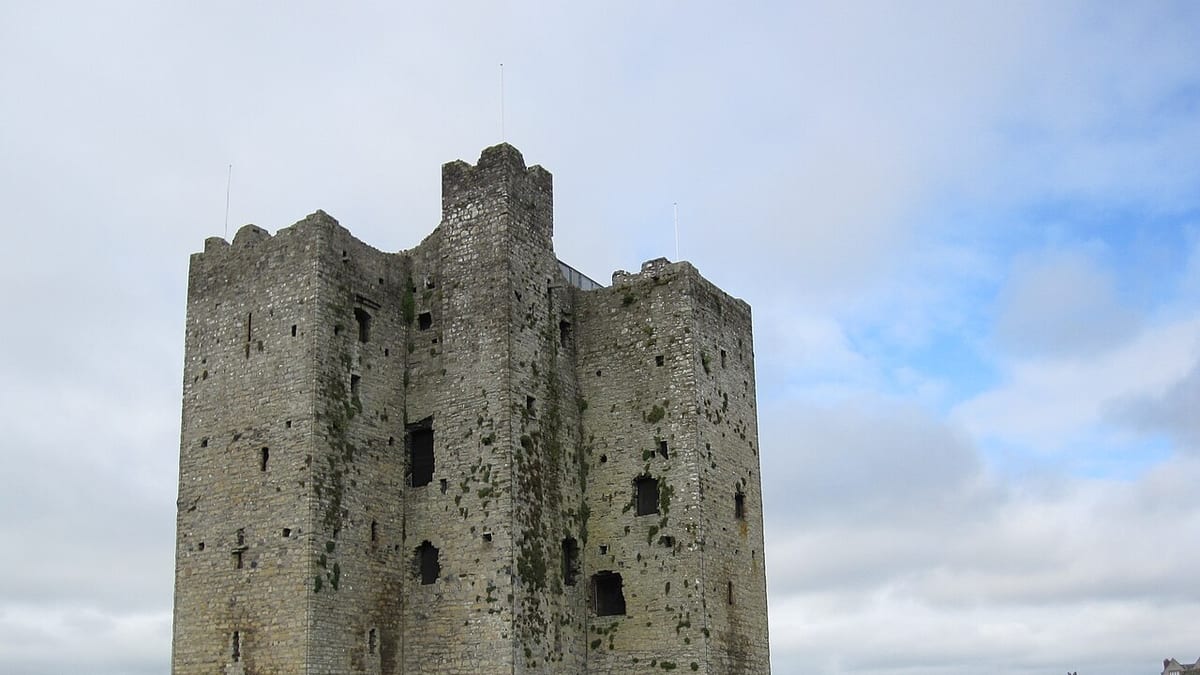
Trim is Ireland's largest Anglo-Norman fortification. Its central keep has a distinctive cruciform plan, with twenty sides and three storeys. Modern walkways allow visitors to look down into the structure and appreciate the thickness and scale of its walls. [1]
This is an architectural experience rather than a tour of furnished royal rooms. The pleasure lies in understanding how the structure was organised and defended, then relating the interior to the enclosing walls and the landscape outside.
Visitors who enjoy imagining how a building functioned are likely to get more from it than those seeking decorative interiors. Pay attention to changes in level, the relationship between openings and wall thickness, and how much of the building's effect comes from its mass rather than ornament.
A guided visit can turn apparently empty spaces into something intelligible. It is worth listening to the explanation before concentrating on photographs, because knowing what you are looking at makes the viewpoints more meaningful. The castle's appeal does not depend on recognising it from a film or collecting another famous name.
For a mixed-interest group, agree in advance that the main attraction is the structure itself. Someone who dislikes stairs or prefers art collections may enjoy the town more than the keep, even when both are available.
Price is modest; access is the bigger consideration
The ordinary published keep-tour tariff is €5 for an adult, €4 for a senior or group-rate visitor, €3 for a child or student, and €13 for a family. Grounds admission is normally free. These are the listed arrangements outside the announced closure, not tickets available for the works period. [1]
The entrance price is therefore unlikely to be the main cost of a Dublin day trip. Transport, meals and the time needed to reach Trim matter more. A cheap attraction can still be a poor-value excursion when the specific part you wanted to see is closed.
Access also deserves more weight than the price. Heritage Ireland warns that stairs in the keep are steep and narrow, that the keep is not accessible to visitors with disabilities, and that access to the grounds is restricted. [1]
A wheelchair user should not buy a transport package on the assumption that "castle visit" means access to the interior. Visitors who can manage a few ordinary stairs may still find a prolonged sequence of narrow steps unsuitable. Ask about the actual route rather than using general fitness as a proxy for comfort.
For families, judge the interest and confidence of the children rather than their enthusiasm for the word castle. A quieter architectural visit involves listening, moving through a historic structure and respecting barriers; it is not a free-climbing playground.
Trim can still justify a stop without the keep
The local tourism authority publishes a Trim Historic Trail that connects the town's heritage features. It also describes the Castle River Walk through the Porchfield towards Newtown Cathedral, with interpretation along the route. [3][4]
These give a closed-castle visit a coherent purpose. Instead of arriving, finding a locked gate and leaving, choose a town walk with a beginning and end, then add lunch. Keep the castle as a major feature of the setting rather than promising your group an interior experience.
The riverside option is particularly useful when you want an outdoor afternoon rather than another museum. It is not an indoor replacement for the keep, however. In poor weather or limited daylight, a dedicated journey may make less sense, especially for visitors who have only a short stay in Dublin.
The visitor centre in the Old Town Hall is another starting point. The tourism authority advertises guided walking options, with advance arrangements for the service you choose. That is distinct from an OPW castle tour and should be booked on its own terms. [5]
Allow a flexible half-day for a town-focused visit, including travel within your day's wider route. This is an editorial planning suggestion, not an official tour duration. A traveller interested in only a quick exterior view needs less time; someone following the historic trail and river walk needs more.
Decide according to the visit you actually want
Choose Trim during the works when you are already exploring the Boyne Valley, enjoy medieval townscapes and are happy with an outdoor route. Avoid presenting it to companions as a castle-interior day, because that creates an expectation the current arrangements cannot meet.
Postpone when your main reason is the keep's interior, elevated walkways or guided explanation of its defensive layout. The modest ordinary ticket price makes the reopened visit attractive, but it does not compensate for travelling on the wrong date.
Finally, do not force several distant heritage sites into the day simply because the castle visit is unavailable. A well-paced town walk, a meal and one carefully chosen additional stop will often be more satisfying than substituting a long checklist for the experience you originally wanted. Trim is strongest when its history and setting are given time, not when it becomes a hurried photograph between transfers.