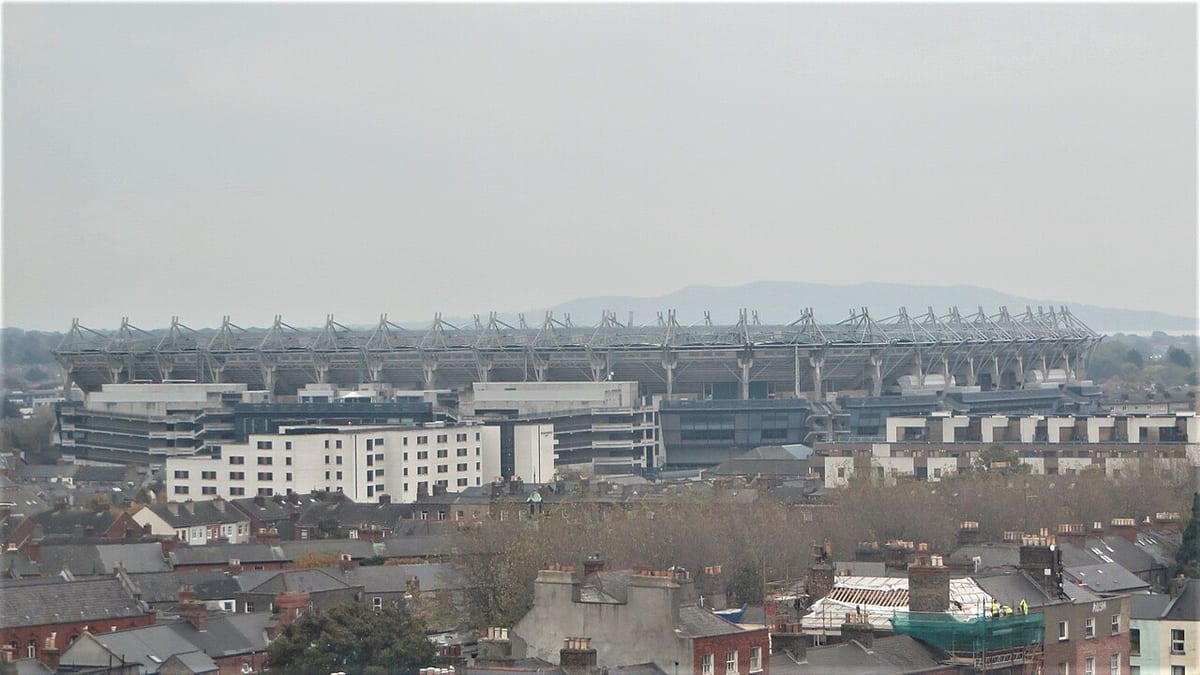
The Croke Park Stadium Tour is worth considering even without detailed knowledge of Gaelic games: it combines a guided look behind the scenes with admission to the GAA Museum. Choose it for sporting culture and the workings of the stadium, not for a match atmosphere or a rooftop walk. Those are different experiences with different tickets. [1][2]
For someone interested only in panoramic views, the standard tour is not the obvious purchase. For a visitor curious about how Irish sport connects with community and history, the combination of a working venue and its museum is the stronger reason to go.
What the stadium tour actually offers
The visitor route introduces areas associated with players, spectators and the operation of the venue. Visit Dublin highlights the dressing rooms, media centre, VIP area and the approach to pitchside through the players' tunnel. These are the advertised highlights, rather than a promise that every room is available regardless of stadium operations. [3]
The difference between pitchside and playing on the pitch matters. Book for the guided route and its interpretation, not on the assumption that you will be allowed to run across the playing surface. An active stadium has operational priorities that a dedicated exhibition building does not.
Even an empty stadium can be revealing. The tour allows you to consider sightlines, distances and how players move from preparation areas into a much larger public space. That is a different perspective from sitting in a stand on match day, when attention is naturally directed towards the game.
For a non-fan, the guide is central to the value. Ask about the organisation of Gaelic games, the relationship between clubs and counties, or why particular moments matter. There is little benefit in pretending to recognise every name; a well-chosen question makes the visit more intelligible.
Leave time for the museum, not just the guided route
The GAA Museum is included with the stadium tour. Its subject is broader than a collection of team souvenirs: the operator describes exhibitions connecting Gaelic games with Ireland's sporting, cultural and social life. An interactive games area offers a chance to try skills associated with hurling and Gaelic football. [1][4]
This is where a visitor unfamiliar with the sports can establish useful context. A museum visit before the tour may help you understand references; visiting afterwards lets you follow up questions raised by the guide. Either order is reasonable, provided you actually leave time for it.
The operator advises approximately ninety minutes for the stadium tour, including an introductory film, plus at least another thirty minutes for the museum. Allow roughly two and a half hours on site when you also want time to arrive, use facilities and browse without rushing. The extra half-hour is a planning allowance, not an official tour extension. [2]
Families should consider attention span as well as the interactive elements. The games area does not turn the entire guided visit into a play session. Children who enjoy sport, large buildings or behind-the-scenes access may find it compelling; very young visitors may prefer a shorter, specifically designed activity.
Tickets: compare the actual party price
The published 2026 stadium-tour price is €18 for an adult, €14.50 for a student or senior with valid identification, and €12 for children aged three to twelve. Children under three are free. Family options include €48 for two adults and two children, or €52 for two adults and three children. [1]
For two adults and two children in the relevant age band, separate tickets would total €60. The €48 family ticket therefore saves €12. That calculation is more useful than treating the headline adult fare as the cost of a family outing.
The operator also lists a €27.50 option for one adult and one child. Compare the available booking categories with your group rather than automatically selecting the standard family bundle. Age definitions and proof requirements should match the people travelling. [1]
Do not buy a second museum ticket when it is already included in the tour. Conversely, museum access associated with a match ticket is not the same as a guided stadium tour. The tour FAQ describes match-day museum admission from the opening of the turnstiles, subject to the event arrangements. [2]
Stadium tour, Skyline or match?
Choose the standard tour when you want interpretation and access to the stadium's internal working areas. Choose a match when the main aim is to experience the games, supporters and live atmosphere. A match will not normally reproduce the behind-the-scenes route advertised for a tour.
The separately sold Skyline experience is the option designed around the elevated route and views over Dublin. It is not included in the standard stadium ticket. Buying the wrong product because both are sold by the same venue is an avoidable mistake. [2][5]
There is also no need to combine all three experiences merely because you are a sports fan. Consider whether a second visit adds something genuinely different. For many first-time visitors, a tour and museum provide enough context; for an established follower, attending a relevant fixture may matter much more.
For mixed-interest companions, discuss the balance honestly. Someone who likes city history but not sport may appreciate the museum and guided explanations. Someone who simply wants a view should not have to sit through a sports-focused visit because the rooftop product was confused with it.
Arrival, access and the event calendar
Tours begin and end at the GAA Museum, normally reached beneath the Cusack Stand via St Joseph's Avenue. Use the museum entrance details supplied with your booking rather than navigating to an arbitrary stadium gate. The site is large enough that the wrong side can create an unnecessary walk. [2]
Match days and other events can alter the tour timetable, available routes or access point. Select a dated tour in the booking system first, then arrange the rest of the day around it. A general daily schedule is less useful than an actual available departure. [1]
The venue describes its museum and stadium route as accessible. However, its current information still carries a notice of museum-lift maintenance originally scheduled from September to mid-October 2026. That announced period has passed; the notice alone does not establish whether the lift has resumed service. Anyone relying on it should obtain a specific operational confirmation before booking. [1][2]
For most visitors, the strongest choice is a booked morning or early-afternoon tour with enough space around it to explore the museum. Croke Park is not just worth visiting because it is large. Its value lies in understanding why the venue matters - and allowing enough time for that story to emerge.