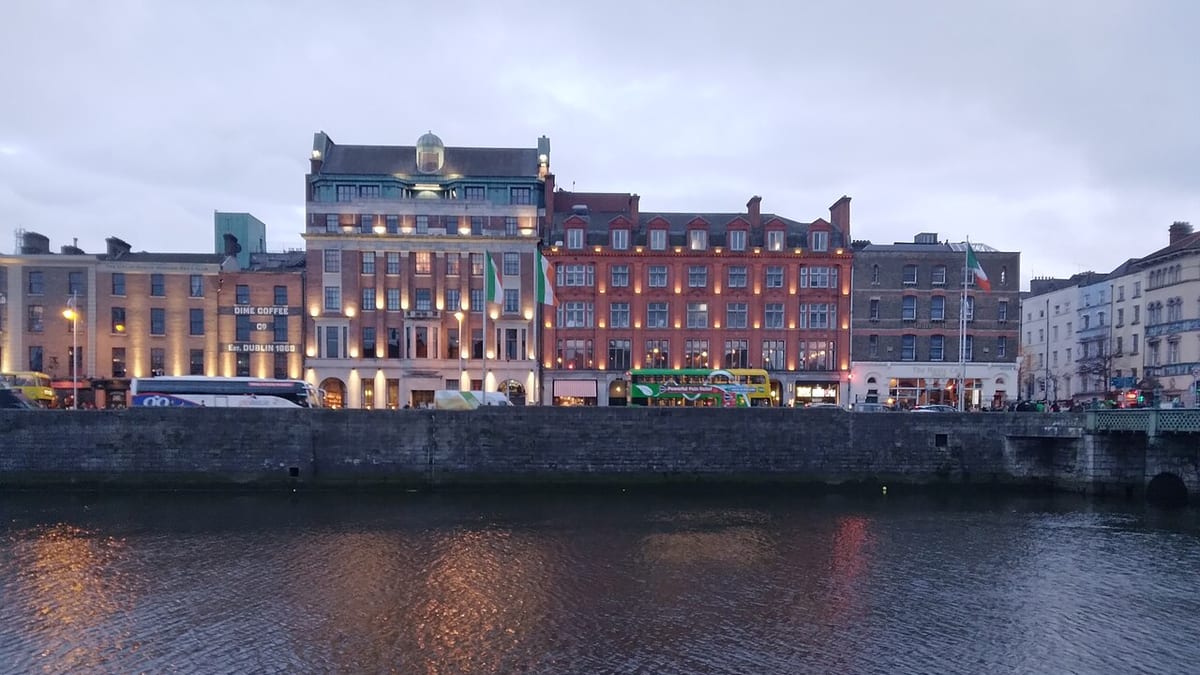
A Dublin River Liffey cruise is worth considering for a short, seated introduction to the quays and Docklands, particularly when commentary matters more than covering a long distance. It is not a coastal excursion or a substitute for exploring the city on foot. Dublin Discovered's standard trip lasts 45 minutes and returns to its starting point. [1]
What route do you actually get?
The operator boards by the Seán O'Casey Footbridge on the north bank, opposite the CHQ building. Its published route runs between Grattan Bridge towards the city centre and the Thomas Clarke Bridge towards the port, before returning. This is the current operator description, not an assumption based on an older departure pier. [1]
That route puts the relationship between the older quays and modern Docklands at the centre of the experience. The Custom House, Samuel Beckett Bridge and waterfront buildings make more sense as a connected river corridor than as a series of unrelated photo stops. [1]
You are buying a viewpoint and interpretation, not access to building interiors. A cruise will not take you inside Trinity College, Dublin Castle or a museum. Keep separate time for the attraction you most want to understand in depth.
The operator describes an enclosed boat with large windows and a glass roof. That is useful in changeable weather, although photographers should think about reflections rather than expecting unobstructed open-deck shooting from every position. [1]
For visitors with limited walking stamina, the seated element may be the decisive advantage. However, the journey to the boarding point and the boarding arrangement still matter. Ask the operator about a particular wheelchair or mobility requirement even though it advertises wheelchair and buggy access. [1]
Current prices and the family calculation
As checked on 6 November 2026, published fares are €21 for adults aged 18–64, €19.50 for seniors, €18.50 for students aged 18–26, €16 for teenagers aged 13–17 and €14 for children aged 4–12. A two-adult, two-child family ticket is €65. Under-fours travel free but must have a place reserved. [2]
For two adults and two children aged 4–12, separate tickets total €70. The family fare therefore saves €5. That is a calculation from the published prices, not a separate discount offer. Do not assume the same family option applies when the children are teenagers.
The booking instructions explain how to select the family rate after entering the relevant passengers and date. It requires enough availability for four people on that departure. Check the final basket rather than assuming the booking system will always substitute the cheapest appropriate combination automatically. [3]
For a couple, the published adult fare means €42 for the outing. Judge that against what you personally gain: a rest from walking, a guided explanation and a different view. It is less compelling when you would mainly prefer to photograph the quays at your own pace.
A visitor who has already taken a detailed city walk may find some themes familiar. In that case, the boat should earn its place through the river perspective rather than being added simply because it appears in another list of attractions.
November is not the summer timetable
The published schedule lists Friday–Sunday departures in November, with sailings at 11:30, 12:30, 14:15 and 15:15, and a December–February closure. The operator notes that tides can alter sailing times and directs customers to the booking calendar for available departures. [2]
This resolves an important ambiguity on general promotional pages: a claim that tours run daily does not establish daily winter operation. For a November Monday-to-Thursday visit, do not build the itinerary around a boat that the seasonal schedule does not offer.
The operator asks passengers to arrive ten minutes before departure. Add your own time for finding the north-bank boarding point; ten minutes is a check-in instruction, not an estimate for walking from your hotel. [2]
Make the booking fit a loose section of the day. Avoid placing a timed museum entrance immediately after the advertised return, especially when you need to cross the centre. A modest gap protects the rest of the itinerary without turning a short cruise into an all-day commitment.
In poor weather, distinguish between a trip you no longer fancy and one the operator cancels. Read the ticket's change and cancellation terms before paying. Weather discomfort and operational cancellation are not necessarily treated the same way.
A riverside walk may be the better choice
Choose the walk when your main interest is architecture, photographs or stopping independently. You can spend longer with the buildings that catch your attention, cross between banks and break for food without following a departure schedule.
Its weakness is interpretation. A self-directed stroll depends on what you already know or are willing to read. The guided boat can be more useful for someone who wants a coherent introduction without organizing the route.
A good compromise is to take the cruise first, then revisit one section on foot. Do not repeat the entire waterfront simply to feel that you have completed it twice. Use the commentary to identify what deserves a closer look.
For a tight budget, walking is the obvious default. Spend the saved fare on the museum, performance or meal that is harder to reproduce independently. The cruise is an optional convenience and experience, not a necessary purchase for understanding Dublin.
Choose a bay cruise for a different question
Dublin Bay Cruises offers routes involving places such as Dún Laoghaire and Howth. Those are coastal outings with their own sailing schedules and destination logistics, not longer versions of the same compact Liffey tour. [4][5]
Choose a bay trip when you want sea views and time in a harbour town. Check whether the ticket is one-way or return, where you finish and how you will get back. A rail return may be sensible, but do not assume it is included without checking the booked product.
Choose the Liffey when the aim is a short city overview and a seated break within an otherwise central day. Its strongest audience is the traveler who values a guide and a river-level perspective. Its weakest audience is someone expecting open-sea scenery, a full afternoon excursion or access to Dublin's major interiors. Match that expectation before comparing prices.
Source & editor notes
Prices and November operations come from the operator's indexed primary pages; direct page retrieval was restricted. The family saving is calculated from listed fares. The booking calendar remains authoritative for tide-related changes and actual availability.