How to Get from Dublin to Glendalough: Routes and Travel Tips
The direct St Kevin's Bus is a practical car-free way to reach Glendalough from Dublin, provided its limited timetable suits your day. For the published winter schedule, the 11:00 departure reaches Glendalough at 12:20, with the return leaving at 16:30. That creates a useful visit, but not an unlimited hiking day; choose the walk around the bus rather than the other way round. [1]
The direct bus removes a complicated transfer
St Kevin's route links Dublin with Glendalough through places including Roundwood, Annamoe and Laragh. The Dublin departure is listed at St Stephen's Green North, with Glendalough's visitor centre as the destination stop. This is a road journey into the valley, not a railway trip followed by a short walk from a nearby station. [2][1]
For a visitor staying centrally, the direct service avoids the need to combine a train with a separately arranged rural connection. Find the exact Dublin stop before the departure day and allow time to reach it. "St Stephen's Green" describes a sizeable area; turning up at an arbitrary side of the park is not the same as locating the operator's boarding point.
The operator's site separates summer and winter timetables and weekday from weekend services. Read the panel that applies to your date. A later return shown in one seasonal column should not be assumed available throughout the year. The site says the service operates year-round except Christmas Day. [1]
The morning outward service is the useful one for a day visit. An evening bus may be valuable for someone staying locally, but it does not turn a late start into a full sightseeing day. Begin by pairing the outward and return journeys you can actually use.
What the winter timetable lets you do
The published winter timetable, labelled 1 November–28 February, shows an 11:00 Dublin departure, 12:20 arrival in Glendalough and a 16:30 return reaching Dublin at 18:00. The interval between arrival and return departure is four hours and ten minutes, calculated from those published times. [1]
That interval is not all walking time. You need to orient yourself, use facilities if required, eat and return to the correct stop before boarding. I would therefore plan a compact valley visit rather than a route whose advertised duration consumes the whole gap.
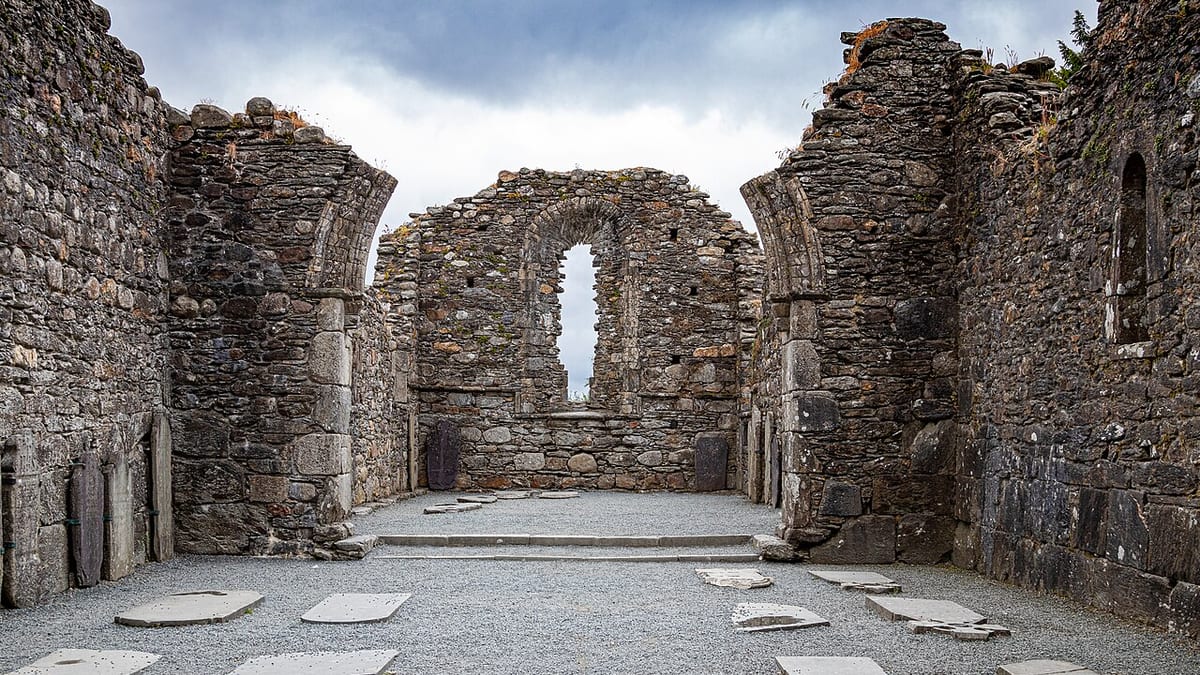
A sensible first visit can combine the monastic area with a selected lake walk, adjusted to the conditions and the pace of the group. Wicklow Mountains National Park identifies Glendalough as a principal visitor area with heritage, lakes and a network of walks. Use its route information to choose the terrain and distance you actually want. [3]
For a longer upland circuit, a car, overnight stay or a different confirmed transport arrangement may be more appropriate. The decision is not about whether the mountain route is attractive; it is whether you can complete it safely while preserving a return margin. A walking-time estimate cannot account for every photograph, slippery section or slower companion.
Fares and Leap: acceptance is not the same as city pricing
The operator publishes an adult Dublin–Glendalough fare of €14 single or €23 return. Its child fare, for under-14s, is €8 single or €14 return. These are the listed route fares, rather than a claim about availability on every departure or eligibility for an unrelated discount scheme. [4]
For an adult making both journeys, two €14 singles would total €28; the published €23 return is €5 less. That calculation is useful only when the return ticket's conditions fit the journey you plan. Confirm those conditions with the operator rather than assuming an unused return portion has a particular refund value.
The service says it accepts most credit and debit cards, cash and Leap, while specifically excluding Leap Visitor and Young Adult products from the acceptance described on its notice. Do not confuse the ability to pay with a Leap card with inclusion in Dublin's urban 90-minute fare. This is a separate route with its own published charges. [1][4]
Keep a payment method available that matches the operator's instructions. If travelling as a group, establish how the tickets will be purchased and whether any advance arrangement is needed. The fare table alone is not proof of a reserved seat.
Driving buys flexibility, not a better day automatically
A car is useful when you want an earlier start, a longer walk or additional stops outside the direct bus route. It also allows you to leave when the weather or the group's energy changes. Against that flexibility, consider driving effort, parking and the fact that a circular hike still has to return you to the vehicle.
Choose the parking area that matches your intended walk using the national park's visitor information. Do not assume every place labelled Glendalough has the same facilities or puts you at the start of every trail. The monastic area and the Upper Lake are parts of a wider visitor landscape, not one compact attraction entrance. [3]
For a party sharing a car, compare the total cost with bus fares, but include the full rental period, fuel and any parking charge. For a solo traveller, the direct bus may remain attractive even when it limits the outing. For a dedicated hiking day, those limits may be the decisive reason to choose another arrangement.
A guided tour can solve transport and provide interpretation, but inspect how long it actually stops at Glendalough. An itinerary combining several counties or attractions may allow far less time in the valley than an independent bus visit. Buy it for the complete itinerary, not because a photograph of the Upper Lake suggests an entire day there.
Let trail conditions modify the plan
The national park announced work on the White Trail, the Spinc and Glenealo Valley route, beginning in July 2026. Such a notice is a reason to read current route updates, not to declare every Glendalough walk closed. An expired one-day closure is likewise not evidence that the same restriction applies to your visit. [5]
Use the park's current advice, a suitable map and the weather forecast before committing to an upland route. Leave enough daylight for the terrain, and carry the clothing and supplies appropriate to the selected walk. A bus ticket does not make a route suitable for the conditions.
For a straightforward car-free day, keep the plan modest: take the direct morning bus, explore a manageable part of the valley and reach the return stop with time to spare. Choose another transport arrangement when you genuinely need a longer mountain day. The strongest Dublin–Glendalough plan is the one that matches the available hours to the walk, rather than relying on a rushed finish to catch the only useful return.