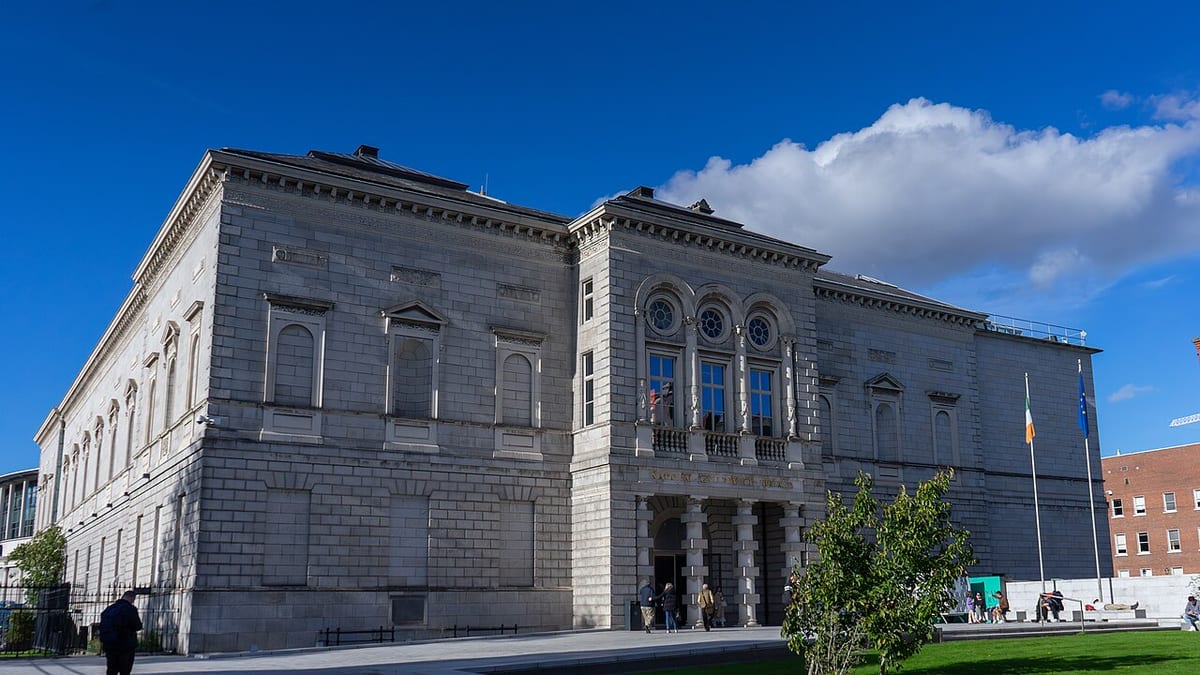
The National Gallery of Ireland is worth visiting even for a short Dublin stay: the permanent collection is free, and an individual visitor does not need to reserve general admission. Give it a focused hour or two rather than trying to see everything. Book separately for a paid exhibition, and plan precisely when a particular artwork is your main reason to go. [1]
Its strongest advantage is flexibility. You can explore Irish art, choose a small group of European paintings or return for a second visit without feeling obliged to extract a full day's value from a general entrance fee.
Choose a thread through the collection
The gallery's collection highlights include Vermeer's Woman Writing a Letter, with her Maid, Velázquez's Kitchen Maid with the Supper at Emmaus, Jack B. Yeats's The Liffey Swim and Monet's Argenteuil Basin with a Single Sailboat. These are useful starting points for planning, not a guarantee that every work is hanging on the day you arrive. [2]
For a first visit, choose a few contrasting pictures rather than a long list of famous artists. A domestic interior, a crowded urban scene and a landscape invite different kinds of looking. Ask yourself where your attention goes first, how the artist directs it and what changes when you stand back.
The comparison can be more rewarding than trying to remember dates and biographies for every room. Read the label after spending a little time with the picture, then return to the image with that information in mind. This keeps the visit centred on the art rather than turning it into a reading exercise.
Irish works also offer a way to connect the gallery with the city outside. That does not mean every painting is a documentary account of Dublin, but it gives you a reason to look beyond the names already familiar from international museum lists.
Ask at the information desk about the current locations of your priorities. A collection page and a historical floor plan are not live display guarantees; loans, conservation and temporary room changes can affect what is available.
One celebrated watercolour needs a specific appointment with the clock
Frederic William Burton's Hellelil and Hildebrand, the Meeting on the Turret Stairs has restricted viewing hours. The artwork's own page currently lists Room 20 on Thursdays from 11:30 to 12:30 and Sundays from 14:00 to 15:00, with a queuing system and entry via Merrion Square. [3]
This creates a counterintuitive planning point: choosing the gallery's Thursday evening opening will not, by itself, let you see the watercolour. Its listed Thursday display is at lunchtime, not during the late session.
Arrive with some margin before the end of the viewing window, particularly when the picture is the main purpose of the visit. The schedule identifies when it can be viewed; it does not guarantee that someone joining a queue at the final minute will have the experience they expected.
For everyone else, there is no need to reorganise the whole trip around one work. Use the collection more broadly and let the special viewing be an optional addition. A museum visit can be successful without reproducing every photograph in a guidebook.
Free collection, optional paid exhibition
The permanent collection and many temporary displays are free. Some exhibitions require tickets, so the presence of a booking button on the website does not mean ordinary admission has become paid. [1]
A current example is Hilma af Klint: Artist and Visionary, scheduled from 15 October 2026 to 7 February 2027 in Rooms 6–10. The gallery advertises ticket categories from €0 to €16. That range includes different eligibility categories; it should not be read as a universal free ticket or a single price for all visitors. [4]
The exhibition brings together paintings, drawings and watercolours, including works connected with af Klint's spiritual and abstract practice. Choose it when that subject interests you, not because a temporary exhibition must automatically be more important than the free collection. [4]
Allow a separate block of time when combining it with the main galleries. A ticketed exhibition followed by a rushed sweep of the permanent rooms is not necessarily better than giving either experience your full attention.
For companions with different interests, agree whether everyone will book the special exhibition or whether part of the group will explore the free collection. That conversation is easier before purchasing timed admission than at the entrance.
Opening time is not the same as final viewing time
The normal schedule is 11:00–17:30 on Mondays and Sundays; 09:15–17:30 on Tuesdays, Wednesdays, Fridays and Saturdays; and 09:15–20:30 on Thursdays. Galleries begin closing earlier, at 16:50 on ordinary days and 19:50 on Thursdays, starting with upper floors. [5]
A 17:00 arrival therefore does not provide a reliable thirty minutes in every room. For a short visit, arrive substantially earlier and identify the rooms that matter before settling into the café or shop.
Thursday evening can be valuable when you want to preserve daylight for outdoor sightseeing. It is best used for a selective collection visit or an appropriately timed exhibition, not as a way to squeeze an entire national gallery into the last hour.
As a planning allowance, reserve ninety minutes for a focused first visit and longer when adding an exhibition or extended break. The suggested duration is not a requirement. Free general entry makes it reasonable to leave while you are still interested rather than continuing until every painting becomes indistinct.
Access, children and luggage
The gallery has entrances on Merrion Square West and Clare Street. It states that galleries and facilities are accessible to wheelchair and buggy users, with a limited number of wheelchairs available to borrow. Its Changing Places facility is in the Beit Wing on level minus one, accessed with a key from an information desk. [6]
For children, a short, purposeful visit is often more effective than a complete circuit. Let them choose a picture to describe or sketch, then compare what each person noticed. The gallery provides free family drawing materials and other creative resources, which can give the visit a manageable focus. [1]
Bring your own phone and headphones when planning to use the gallery's audio resources: its visitor guide says loan audio handsets are not currently available. That small preparation can be more useful than arriving with an elaborate checklist of works. [1]
The gallery is not a general left-luggage service. Its lockers are intended for appropriately sized bags, and large suitcases that do not fit are not admitted or stored. Leave substantial luggage elsewhere before treating the museum as the stop between hotel checkout and a flight. [1]
The National Gallery is especially rewarding when you decide what kind of visit you want before entering. Choose a small collection route, reserve a special exhibition only when it adds something meaningful, and respect the separate viewing window for Burton's watercolour. The result can be a substantial art experience without a general admission bill or an exhausting all-day schedule.