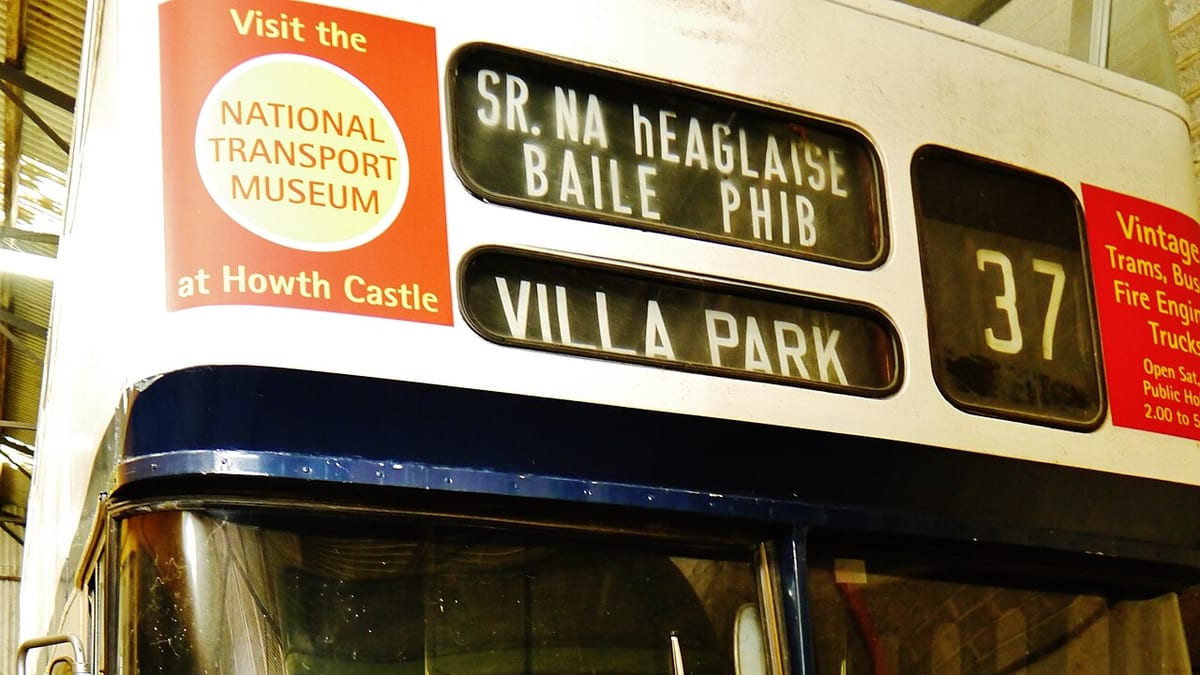
The National Transport Museum of Ireland is worth visiting for historic vehicle enthusiasts and families already planning a Howth outing. It is a volunteer-run collection of public and commercial road transport, not a polished all-day theme attraction. The main practical limitation is its short opening window: Saturdays, Sundays and public holidays, from 14:00 to 17:00. [1][2]
That makes timing more important than the low admission price. A weekday visitor cannot simply add it as a rainy-afternoon stop, and a weekend itinerary should leave enough time after lunch to see the collection rather than arriving just before closing.
A transport collection, not a railway excursion
The museum is based at the Heritage Depot in Howth Castle Demesne. Its collection covers passenger transport, commercial vehicles, fire and emergency services, military vehicles and utility transport. This gives it a broader focus than a display devoted exclusively to buses or private cars. [2]
The interest lies in the vehicles as working objects. Compare the space allocated to a driver with that used for passengers or equipment. Look at how bodywork, loading arrangements and access doors reflect the job each vehicle was designed to perform. These observations can be engaging even without specialist knowledge of manufacturers.
For a transport enthusiast, the reward is seeing preserved types and details that are easy to overlook in a general city-history museum. For a visitor with only a passing interest, choosing a few contrasting vehicles may be more satisfying than trying to absorb every label.
Do not assume the admission includes a ride. The advertised offer is access to a vehicle collection. Likewise, being inside Howth Castle Demesne does not make the museum ticket a castle-house tour or grant access to every building on the estate.
This distinction is particularly useful when planning for children. Explain that they are going to see historic vehicles, not necessarily climb into or operate them. Ask a member of the museum team which areas may be entered rather than interpreting an open-looking doorway as an invitation.
What the modest ticket price buys
The museum currently lists adult admission at €5.50, with €4 tickets for children, seniors and students. A family ticket is €12; the website does not clearly define the family composition beside that price, so confirm eligibility rather than assuming an unlimited group is included. [1]
For two adults, admission totals €11 before transport or food. That is a low-risk addition to a Howth day for people genuinely interested in the collection. It is less persuasive as the sole reason for a cross-city journey when neither adult particularly enjoys transport history.
The museum describes itself as a voluntary organisation and registered charity. Think of the entry charge as access to a specialist preservation project, not a promise of the facilities or presentation found at a much larger commercial attraction. [1]
That is not an excuse to lower every expectation; it is a way to choose intelligently. Visitors who value original objects and the work of preservation may prefer this setting. Those looking primarily for immersive digital displays, a large café or an extensive programme of scheduled activities should verify those specific requirements before committing.
Give the afternoon a workable order
For a straightforward outing, arrive in Howth before the museum opens, have lunch or a short harbour walk, then visit in the early afternoon. This uses the restricted opening window without forcing the rest of the day to depend on finishing a long coastal hike on time.
Budget about an hour for a selective visit, with longer for enthusiasts who want to study details or ask questions. This is an editorial estimate, not a timed ticket or a museum guarantee. The useful point is to preserve enough of the three-hour opening period to explore comfortably.
An arrival close to 17:00 is a poor plan even though the museum is technically listed as open until then. Closing time is the end of the visit, not a promise that a late arrival receives a full additional hour.
A morning boat trip or lengthy walk may also be difficult to combine if its return time is uncertain. Choose the activity you care about most and protect it first. The museum works particularly well as the focused indoor element of a more relaxed coastal day.
During a public-holiday weekend, use the operator's actual opening notice rather than assuming every seasonal event follows the normal schedule. The website's event announcements and ordinary hours are different things; a past Heritage Week listing is not evidence of an event running on your date. [1]
Getting there without confusing the estate entrance
Visit Dublin places the museum approximately 730 metres from Howth DART station, within the castle demesne. That makes the train a practical starting point for visitors travelling without a car, but the station platform is not the museum door. [2]
Use the Heritage Depot location for the final approach. A navigation result labelled only "Howth Castle" can describe the wider estate rather than the precise museum entrance. Save the museum location before leaving the station, especially when your remaining time is limited.
The tourism listing contains older bus-route wording, so it should not be used as a current timetable. Use the live Transport for Ireland planner for the date and departure point you need. The DART also requires its own service check when engineering work affects your travel day. [3]
Visitors requiring rail boarding assistance should arrange that separately with Irish Rail. A museum opening time does not provide any assurance about assistance at the stations used along the way. [4]
The available visitor information does not provide enough detailed access measurements to guarantee suitability for every wheelchair or mobility aid. Contact the museum about the route through the depot, toilet access and any vehicle interiors you hope to enter. A family-friendly listing is not a substitute for those particulars.
Who should put it on the itinerary?
The strongest audience is someone who likes buses, service vehicles, transport design or the history of everyday work. It can also suit a family whose children enjoy looking closely at real machinery, provided expectations about touching and climbing are realistic.
It is a less essential stop for a first-time Dublin visitor with only one day and no special interest in the subject. In that case, the journey and limited opening hours may displace something more central to the trip.
As part of a well-timed Howth afternoon, however, the museum offers a distinct subject at a modest price. Keep the visit focused, leave time to reach the actual depot, and pair it with a coastal stop that does not turn the afternoon into a race. Its appeal is the collection itself - not the promise of a larger attraction it has never claimed to be.